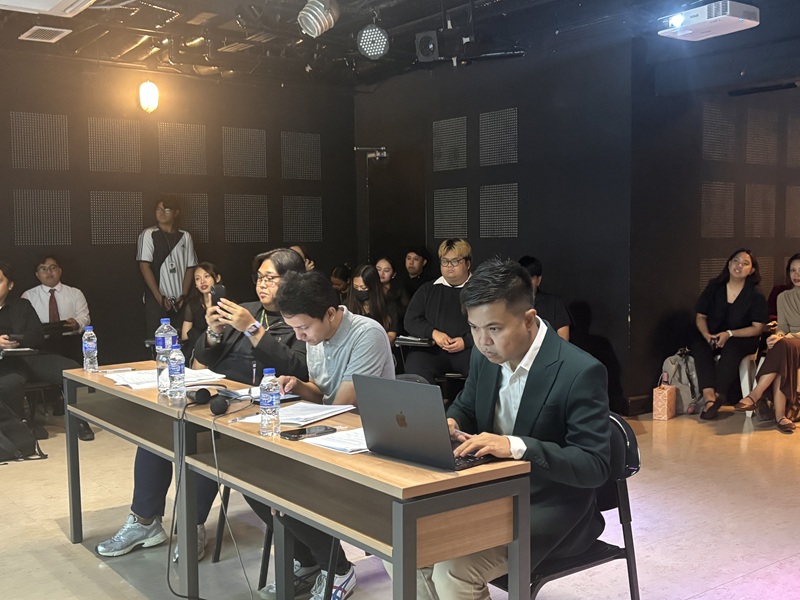
As part of its contribution to Far Eastern University’s 98th Foundation Week celebration, the Department of Communication of the Institute of Arts and Sciences held its “Research Student Colloquium: Search for the Best Thesis” last Feb. 12 at Arts Building Theater. The annual academic event highlighted exemplary undergraduate research engaging contemporary issues across Filipino media landscapes.
This year’s finalists collectively examined how meaning, power, and identity are negotiated across platforms and texts, from digital intimacies and online behaviors to cinematic representations, political rhetoric, historical memory, and media economies. The studies reflected rigorous application of theory and method, demonstrating how undergraduate scholarship can meaningfully contribute to conversations in cultural, media, and political communication.
Serving as jurors were Dr. Juanito Anot, Jr., director of the University Research Center; Eldrin Jan D. Cabilin, chair of the Department of Interdisciplinary Studies; and George Vincent Gamayo, assistant professor at the Polytechnic University of the Philippines and graduate of BA Communication from FEU. The panel evaluated the finalists based on both their IMRAD-format research articles and oral presentations.
The Best Thesis Award was conferred on “Filipino Women’s Postcolonial Identities Reflected in Ricky Lee’s Selected Screenplays during Martial Law: A Patriarchal Bargain Analysis” by Joshua Paul Guevarra, Mackheanzi Bañez, Maria Fionna Malagkit, and Dan Rose Ann Santos, with Dr. Augustus Ceasar Latosa as adviser.
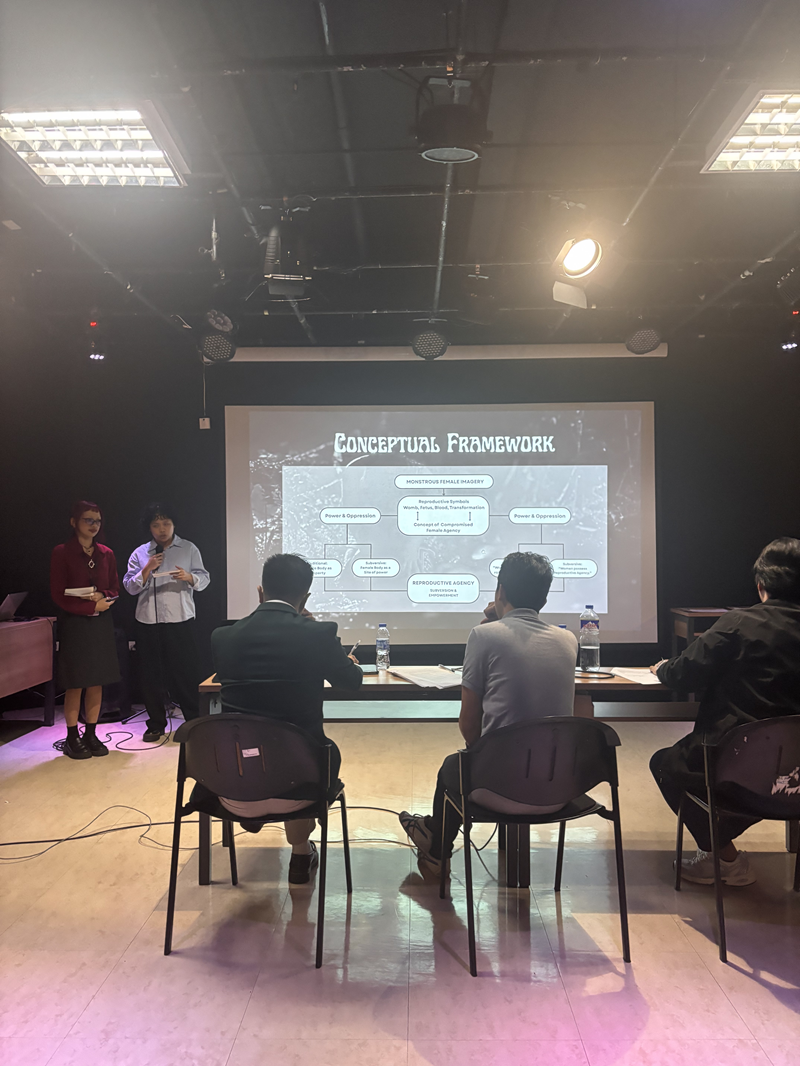
The First Runner-Up award was given to “Swipe, Chat, Sext: Understanding Sexting Behaviors among Single Male and Female Filipino Gen Zs on Bumble” by Aleen Louise Abad, Hershey Bulanadi, Randy Espares Jr., Thea Danielle Morin, and Jasmien Ivy Sanchez, also under the advisership of Dr. Latosa.
The Second Runner-Up award went to “Are You Knotty or Nice? Analyzing Queer Men’s Sexual Fantasies and the Complexities of Consent through Omegaverse Fiction” by Xairwen Gupo, Beatrice Abigail Cupalao, Georgely Victoria Flores, Guinevere Lachica, and Princess Jade Ronato, advised by Joseph Ryann Jalagat.
In her opening remarks, Christina Stella Ustaris, Department of Communication chair, emphasized the centrality of research in cultivating intellectual discipline and advancing communication scholarship. She underscored that the colloquium is not merely a competition but a celebration of inquiry, affirming the department’s commitment to critical, socially relevant, and theoretically grounded research.
The colloquium reaffirmed the Department of Communication’s commitment to nurturing research that interrogates structures of power, inquires representation, and deepens understanding of contemporary media realities. Through sustained mentorship and scholarly engagement, the department continues to train Tamaraw researchers who are prepared to contribute critically and responsibly to the discipline.