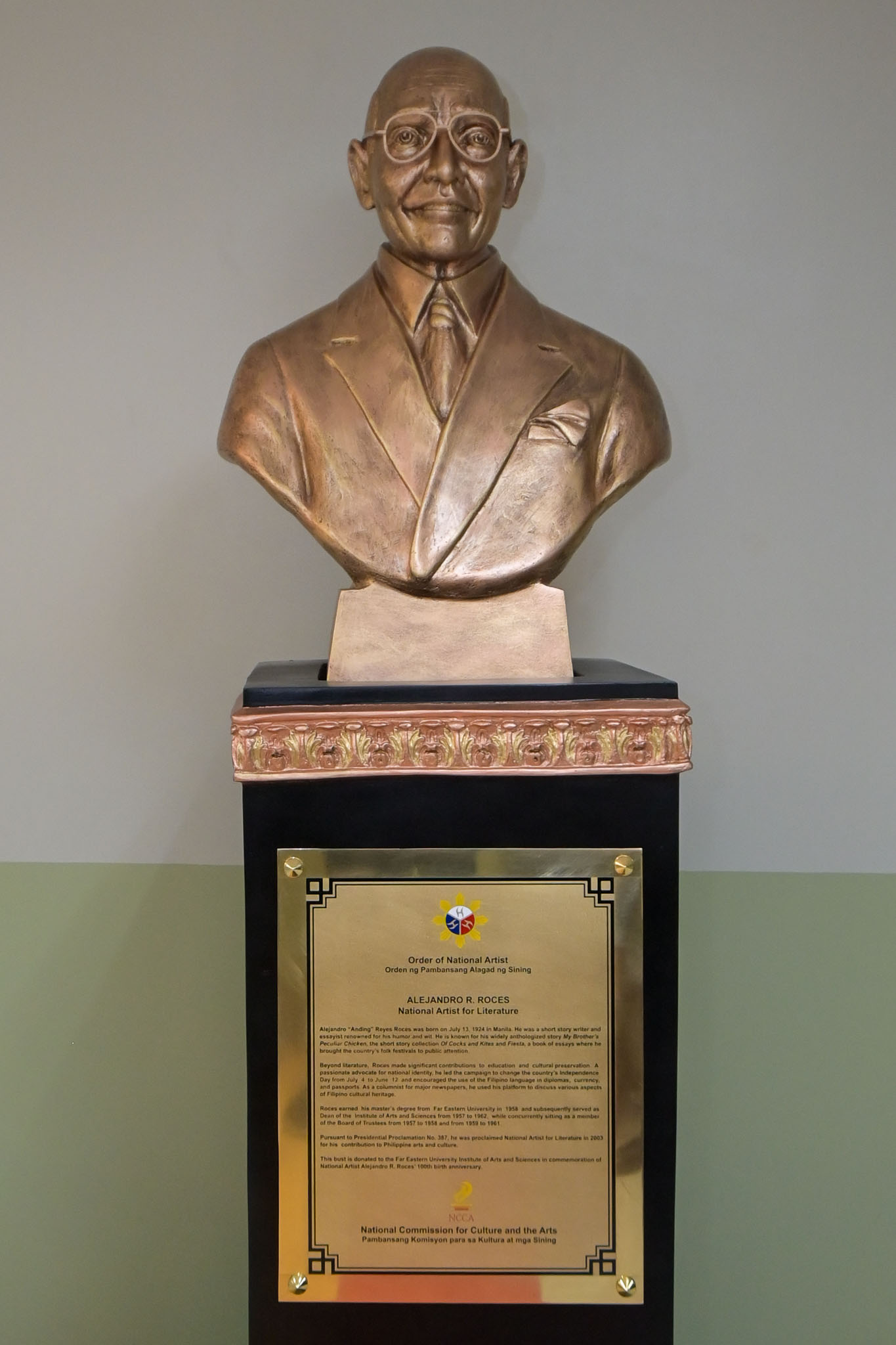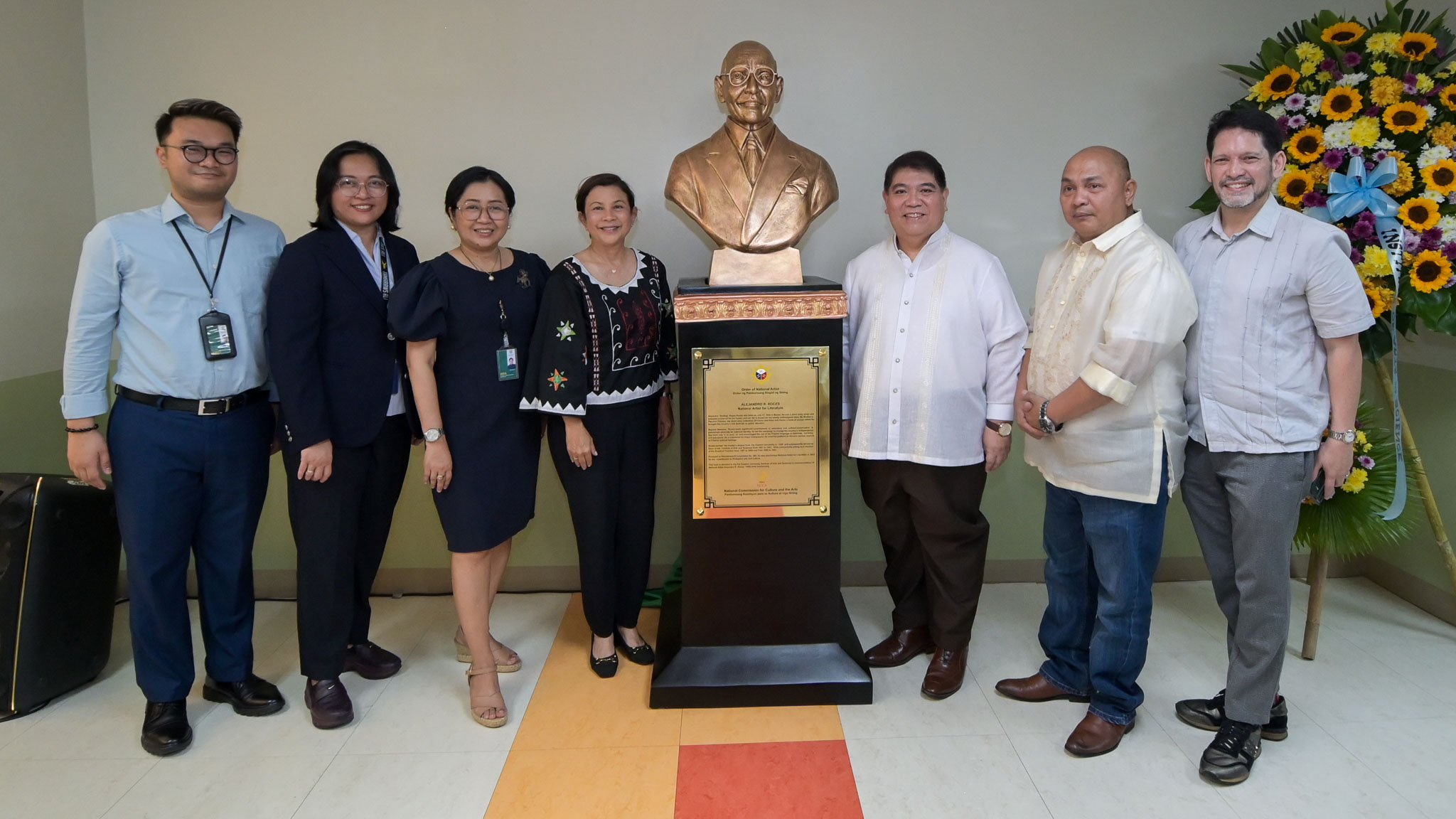
Far Eastern University marked a defining cultural moment with the unveiling of the bust of National Artist for Literature Dr. Alejandro R. Roces, former Dean of the Institute of Arts, and Sciences. More than a tribute, the ceremony affirms the University’s commitment to sustain cultural memory as a lived and shared experience within the University and beyond.
The bust now stands as a permanent cultural marker within the Arts Building, made possible through the National Commission for Culture and the Arts’ donation in celebration of Dr. Roces’ centennial birth anniversary. More importantly, the unveiling strengthens FEU’s position as a university that anchors education in culture.
Bernan Joseph R. Corpuz, Deputy Executive Director for Operations of the NCCA underscored that the tribute carries forward the values Dr. Roces stood for: “This bust therefore stands not only as a tribute to the man, but also as a reminder of the values he embodied: intellectual curiosity, cultural pride, and the courage to speak about who we are as a people.”
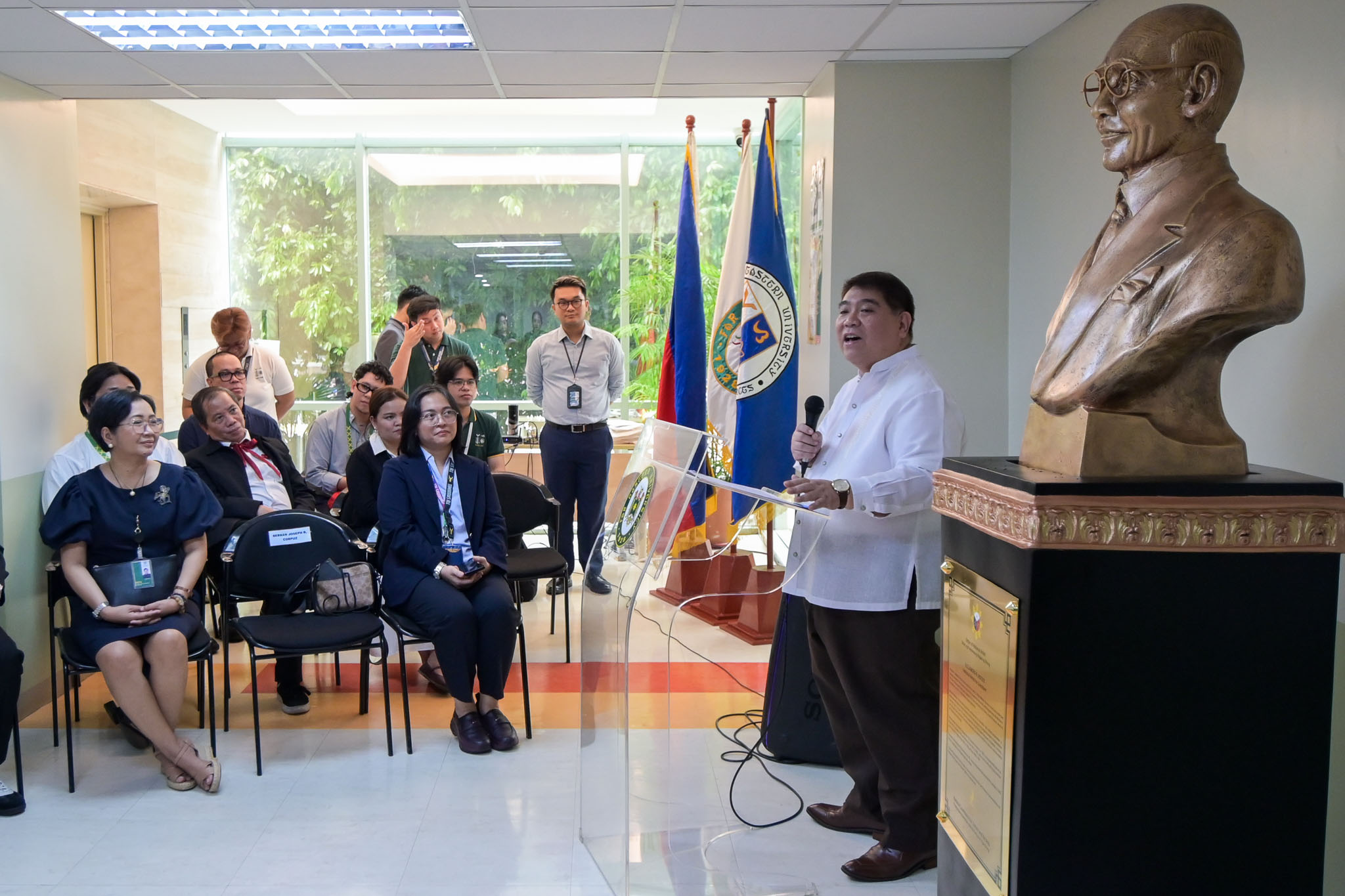
The unveiling also affirms continuity. Dr. Roces’ relationship with FEU, as alumnus, Dean, and trustee, is sustained through programs such as the Alejandro Roces Professorial Lecture, which continues to generate conversations on culture and identity. As shared by FEU Trustee Atty. Gianna Montinola, the occasion reflects more than remembrance. It “symbolizes the enduring relationship between memory, scholarship, and national identity.”
The ceremony was led by Atty. Gianna Montinola, together with University officials Dr. Rowena Capulong-Reyes, Mr. Genesis Borja, Mr. Martin Lopez, Dr. Myra D. Landagan, and Mr. Francis Esteban, alongside faculty, students, and members of the FEU community. Representing the NCCA were Mr. Corpuz, with Lou Izabelle Danganan and Sharon Beltran. Sculptor Mr. Frederic Caedo, whose work gives form to Roces’ legacy, was present, while Mr. Austere Rex Gamao and Mr. Ian Del Ponay brought his words back to life through selected readings.
This moment is not only about remembering Dr. Roces. It reminds us that culture, when lived and shared, continues to shape who we are as a University and as a people.