Approved by the Academic Executive Council, December 11, 2025
I. Rationale
The Blended Learning Policy, in compliance with existing memorandum orders of the Commission on Higher Education, is designed to balance the flexibility provided by online learning with the need for increased face-to-face instruction.
Therefore, Far Eastern University will implement a blocked-blended model that increases face-to-face instruction while retaining purposeful blended and online components.
II. Blended Learning Structure
- Face-to-Face (F2F) Weeks
- Blended Weeks (MTW classes meet onsite, ThFS classes are conducted online)
- Fully Online Weeks (synchronous learning format)
A semester calendar specifying these blocks shall be released by the Academic Affairs Office. For the second semester 2025-2026, blended learning has the following structure:
| Weeks | Modality |
| 1 – 3 (January 12 to February 1) | Full Face-to-Face |
| 4 – 7 (February 2 to March 1) | Blended |
| 8 – 9* (March 2 to 15) | Full Face-to-Face |
| 10 – 11 (March 16 to 29) | Blended |
| 12 (March 30 to April 5) | Fully Online (Grade Consultation, Holy Week) |
| 13 (April 6 to 12) | Fully Online |
| 14 – 16 (Apr 13 to May 3) | Blended |
| 17 – 18** (May 4 to 17) | Full Face-to-Face |
*Midterm Exams
** Final Exams
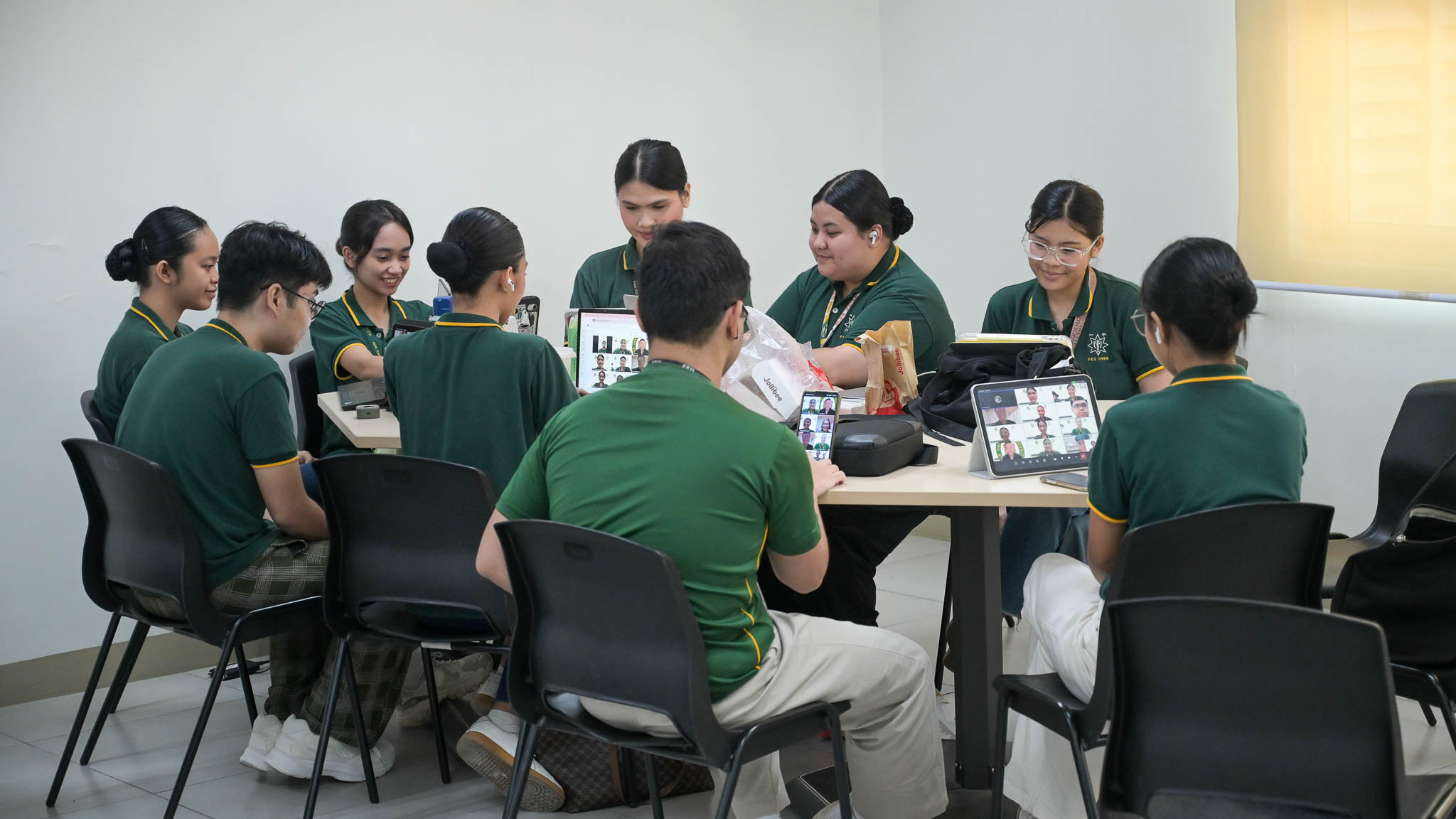
All courses, including the Wellness and Recreation Program, should follow the blended learning structure. Some degree programs and course clusters have a pre-approved blended learning format modified to accommodate their specific learning outcomes/requirements.
III. Features of the Blocked-Blended Model
- Increased onsite or face-to-face instruction
- Reduced weekly mode switching
- More purposeful online learning
- Predictability and clarity of schedules
IV. Rules for Synchronous Online Sessions
- All online sessions must be synchronous (i.e., the faculty conducts lectures or facilitates learning activities during the scheduled class).
- Attendance must be taken through Canvas and this serves as the official record for both the faculty and students.
- Faculty should use FEU Microsoft Teams for video conferences and chats.
- Faculty should record the proceedings of their synchronous classes using Microsoft Teams.
V. Classroom and Space Allocation
- Room assignments indicated in Student Central for enrolled courses are for reference purposes and operational efficiency. These room assignments do not apply during online classes.
- F2F weeks use all assigned rooms; online weeks do not utilize rooms, but the assigned rooms will be made available for approved make-up classes.
- Blended learning hubs will be assigned for students who need WIFI access on campus during the Blended Weeks.
VI. Special Provisions for Select Courses
- Additional F2F sessions for intensive hands-on courses may be arranged by the departments with the approval of the Dean prior to the start of the semester.
- Faculty Clusters1 may request asynchronous classes during the scheduled blended learning weeks for special student needs, such as video production or field work, provided these are declared at the start of the semester and approved by the Dean through the Department Chair.
- Nursing programs shall follow their approved compartmentalized blended learning modality.
- Course Information Booklets (CIBs) shall reflect the approved modalities and be provided to the students at the start of the semester.
- Refers to an assigned group of faculty who work collectively in designing the requirements, learning activities, and other strategies for a specific course, or cluster of relevant/aligned courses per department. For example, a Research Cluster is in charge of all courses related to thesis production. ↩︎
VII. Learning Continuity Mechanism
- When the local or national government suspends classes due to extreme weather events or political events that disrupt public transport, but the government did not explicitly suspend online classes, scheduled F2F classes shall automatically convert to Fully Online.
VIII. Review and Evaluation
The Academic Executive Council will review this model each semester based on student surveys, faculty feedback, and operational feasibility.
IX. Effectivity
This policy shall take effect in the Second Semester of SY 2025 – 2026 upon the approval of the Academic Executive Council.