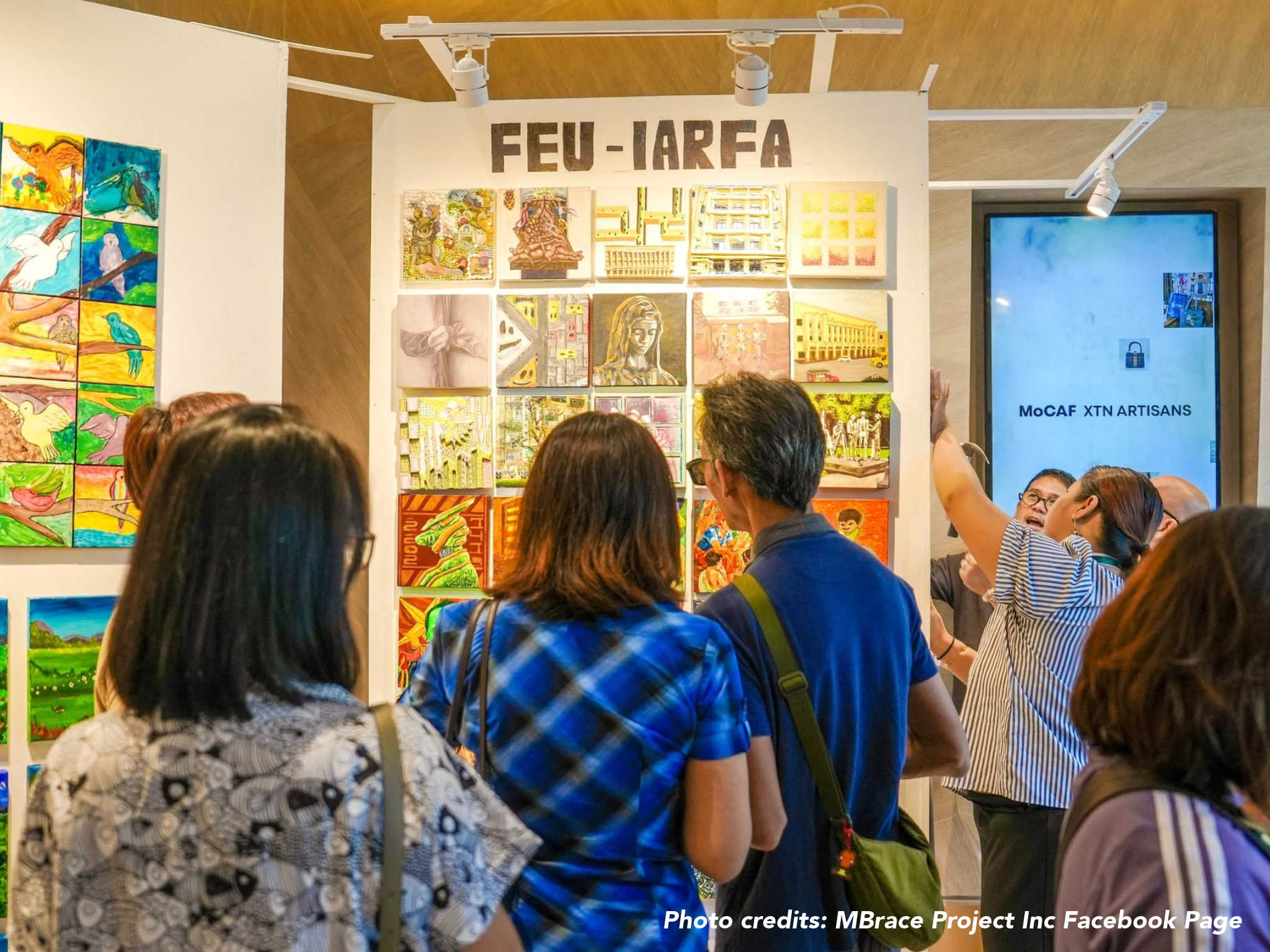
When the opportunity came to exhibit at the Manila Open Culture Arts Festival (MoCAF), Dexter Sy could have used the space to show his own work. Instead, the Far Eastern University (FEU) Fine Arts alumnus and special lecturer chose to give his slot to his students.
It was a decision that reflected how he sees his role as an artist and educator. For Sy, helping students find their place in the art world means giving them opportunities to experience it for themselves—not simply telling them what it is like.
As he helped bring together artists from Fine Arts, Architecture, and the faculty for the FEU Institute of Architecture and Fine Arts (FEU IARFA) exhibit at the Fundación Sansó booth, he helped prepare 43 works for the exhibition. Among them were pieces by students who, through the opportunity, could present their work beyond the familiar setting of the classroom.
For Sy, seeing young artists take part in an exhibition of this scale was part of what made the experience meaningful.
Students as artists
Exhibiting at an art fair can mean more than having one’s work displayed. It gives artists the chance to encounter new audiences, receive feedback, connect with other creatives, and understand where their work fits in a wider artistic community.
For students, that experience can be especially important. Seeing their work presented alongside those of established artists can help them recognize that they, too, have a place in these spaces.
Sy wants his students to approach their practice with that sense of possibility. He does not see them only as learners completing classroom requirements, but as artists developing their own perspectives and bodies of work.
“I never treat my students as just regular art students. I treat them as young artists, and I respect them as such,” he said.
That respect also means allowing room for differences in how people create and understand art. For Sy, an educator’s role is not to make students produce work that looks like their own. It is to recognize their individual perspectives and encourage them to develop further.
His decision to give up his exhibition slot at MoCAF put that belief into action. Rather than keeping the opportunity for himself, he made space for students to experience something that could encourage them to keep creating.
Lessons do not end
Sy’s perspective as an educator is closely tied to his experience as a practicing artist. Having worked through the realities of making and exhibiting art, he brings lessons into the classroom that students may not always encounter through theory alone.
Preparing work for an exhibition, for instance, involves decisions that begin long before the opening. Artists need to understand the venue, consider the scale of their pieces, plan for transportation, and make sure their work is ready to be displayed.
These were among the practical considerations behind FEU IARFA’s preparation for MoCAF. With 43 works to organize for the Fundación Sansó booth, the team had to account for artwork dimensions and set realistic timelines for completion. Sy also follows a personal rule: he does not exhibit work that is unfinished or still wet.
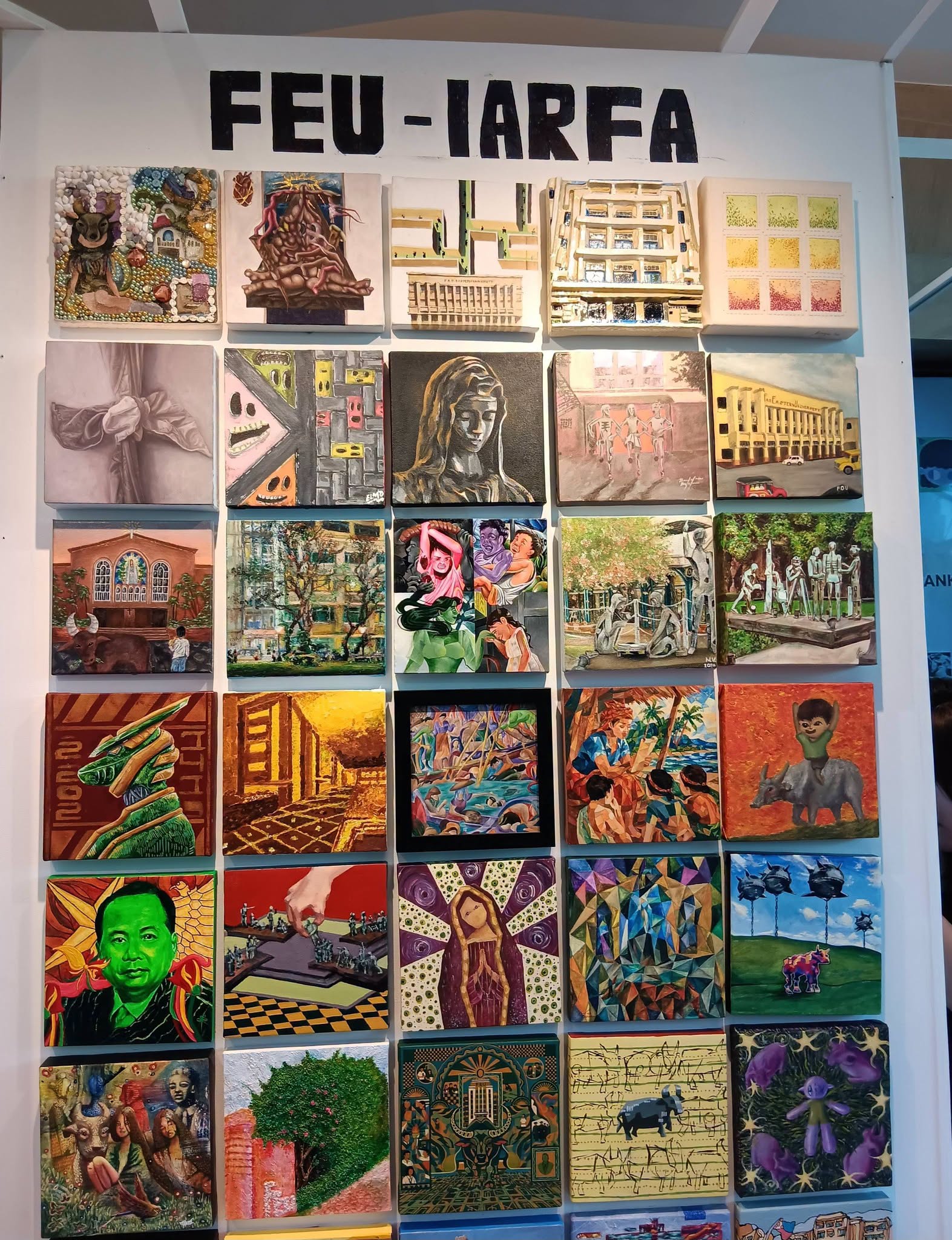
Photo credits: Fundacion Sanso Facebook page
For him, these are not simply logistical concerns. They are part of learning how to take one’s work seriously and prepare it for an audience.
He also encourages students to look beyond the commercial side of an artistic career. While selling work is one measure of success, Sy believes that the ideas and conversations an artwork brings forward matter just as much.
“Success in art is not measured by sales alone,” he said. What matters more to him is critical success—the substance, discourse, and integrity behind the work.
It is a perspective he hopes students will carry as they navigate a field where creative practice and professional realities often meet.
Looking for artistic voice
For Sy, developing as an artist also involves understanding where one’s ideas come from. He encourages students to look at their own surroundings, particularly the culture, history, and narratives that shape their identities.
“I encourage my students to start by researching our own backyard—our culture, our history, our own narratives,” he said.
The advice comes from his own experience. As his worldview has matured, his artistic practice has also changed. Historical events and present-day issues have become part of how he develops concepts for his work. He approaches these subjects with greater discernment, learning when to consider different perspectives, remain centered, or take a stand.
This process of learning and reassessing one’s views is something he wants students to experience in their own work. Rather than looking elsewhere for ideas simply because they seem more familiar or widely recognized, he encourages them to find meaning in the stories and experiences around them.
At MoCAF, those developing perspectives had a place to be shared. The exhibition allowed students to move their work beyond academic requirements and become part of a larger conversation about contemporary art.
Spaces for next generation
Sy sees opportunities like MoCAF as important, particularly because young artists today have access to platforms that were less available to his generation when he was a student.
The collaboration between FEU IARFA and Fundación Sansó helps create these opportunities for students, faculty, and alumni to exhibit their work and engage with a wider audience. For Sy, he hopes this is only the beginning.
He would like to see more international and museum exhibitions for FEU artists and graduates. He also hopes that those who find success in their careers will eventually give back to the communities that helped them begin.
It is a hope that brings his work as an educator back to the reason he gave up his own space at MoCAF. Opportunities matter, but so does making sure that the next generation has someone willing to open a door for them.